A problem affecting surgery as a whole
8,000 surgeons and 1 million surgical procedures
In Switzerland, more than 8,000 surgeons work across a range of disciplines, from general surgery to orthopaedics and neurosurgery. They are among the approximately 42,600 doctors practising in the country (source : fmh.ch).
Each year, around 1 million surgical procedures are carried out in Switzerland. For surgeons, documenting these procedures and their career trajectory is essential, much like a pilot’s logbook. The logbook or surgery record, is simultaneously a requirement, a record of competence and a history of their practice.
Fragmented documentation
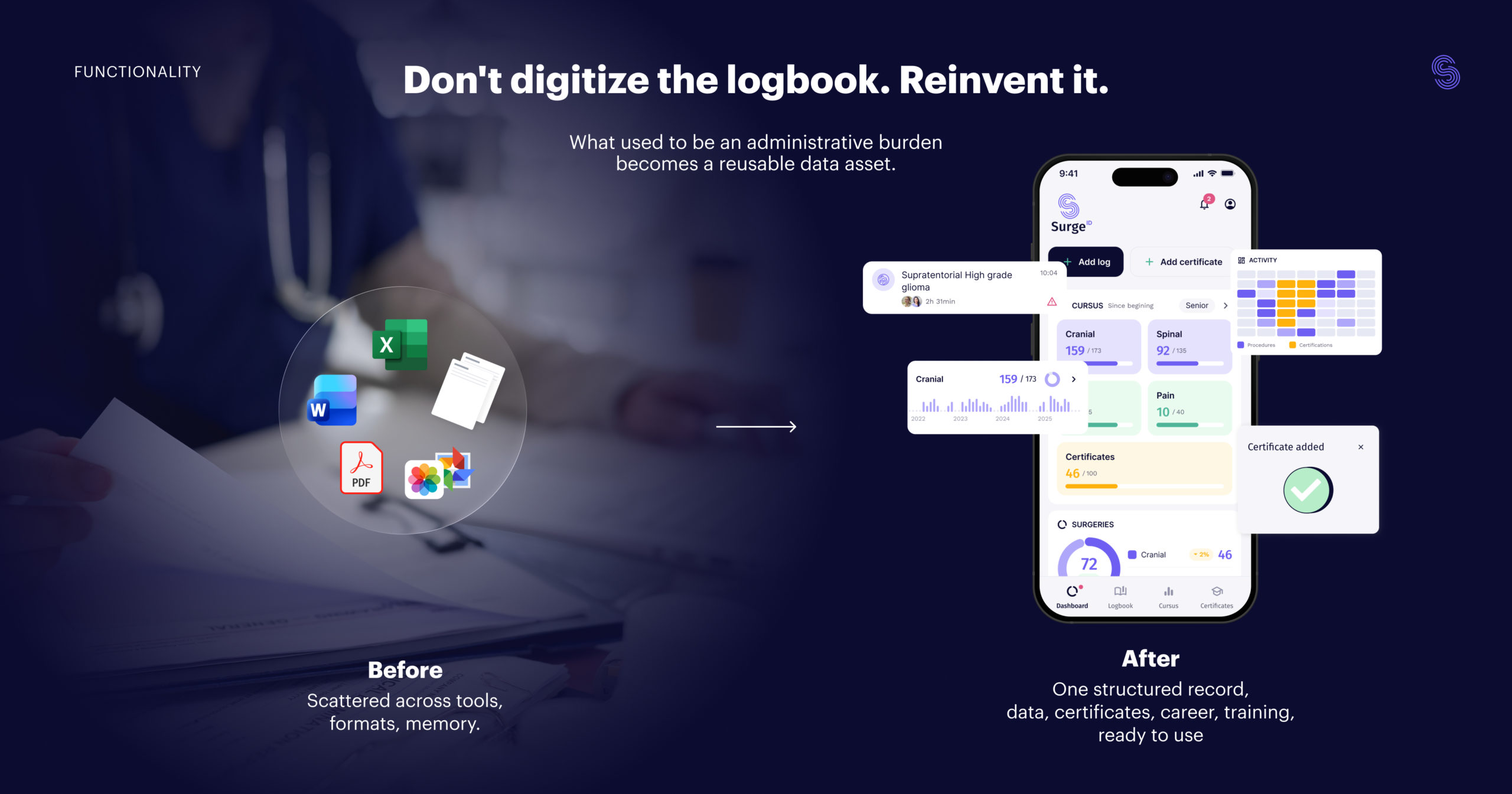
Yet this documentation remains largely fragmented: Excel, Word or PDF files, loose sheets of paper, and photos stored on personal smartphones. Every year, thousands of professionals therefore generate a considerable volume of data that is difficult to structure, use and make the most of.
The issue therefore goes far beyond the administrative burden. It affects training, data security and competency tracking, as well as the ability of institutions to analyse and optimise surgical practice.
Go one step further
SurgeID’s ambition goes beyond simply recording procedures. The aim is to build a technological foundation, accessible on mobile and web, that allows a procedure to be documented in less than two minutes and transforms every surgical procedure into structured, secure and immediately usable data.
Ultimately, the platform aims to move from a multitude of individual and heterogeneous data points to a common standard for surgical data, usable at institutional level and, ultimately, across Europe.
The surgeon’s hands are never free
To understand how to design a tool for surgeons, you first need to understand their working environment.
Surgery is nothing like office work. A surgeon may work across one or more hospitals, perform several procedures in the same day, and move between operating, consultations, training and administrative responsibilities. In the operating theatre, their full attention is focused on the patient and the procedure at hand.
Once they are scrubbed in and enter the operating theatre, everything is designed to preserve sterility and concentration: surgical attire, gloves, a mask or helmet, sterile instruments and precise procedures. It is neither the time nor the place to fill in a form.
And yet, this is precisely when the most important information is generated.
Before the procedure
The operating schedule sets out the planned procedures, the patients and the organisation of the day. The surgeon knows what they need to operate on, but the information needed to track their activity is often spread across several systems and documents.
During the procedure
The surgeon operates. They make decisions, use different techniques, work with their team and respond to the specific circumstances of each patient. Their goal is not to document their activity; their goal is to treat the patient.
The tool must therefore fade into the background. It cannot interrupt the procedure, distract the surgeon or require any data entry during the operation.
After the procedure
This is when the logbook should be completed. But after several hours in the operating theatre, sometimes following several procedures in succession, retrospectively entering the information becomes a tedious administrative task.
This is where the tension between two worlds emerges. On the one hand, the growing complexity of procedures (specific implants, neurosurgical techniques, imaging); on the other, data-entry tools that are disconnected from the medical procedure itself.
This administrative task is regularly put off, completed in haste or filled in based on memory and scattered documents. This approach can lead to omissions, errors or inconsistencies. The consequences are felt differently across all the stakeholders involved.
- For the surgeon
A poorly documented career or fragmented training. The logbook (a mandatory document) reflects progress throughout training and determines access to specialist certification. - For the hospital
Without a consolidated view of actual skills (who has performed what and how often), the supervision of junior surgeons and the planning of operating theatres remain largely empirical. - For data quality
Information entered retrospectively and without structure is information lost for statistical analysis or clinical research, even though traceability is now a regulatory requirement (MDR 2025). - For confidentiality
Using unsecured channels to store medical images exposes practitioners and hospitals to legal risks.
This reality shaped the design of SurgeID. The project team did not ask surgeons to adapt to software. Instead, they set out to design the tool around their day-to-day work.
A tool designed for the surgeon’s day-to-day work
A tool designed for the surgeon’s day-to-day work
A tool designed for the surgeon’s day-to-day work
Why a mobile app?
The choice of mobile follows directly from the constraints described above.
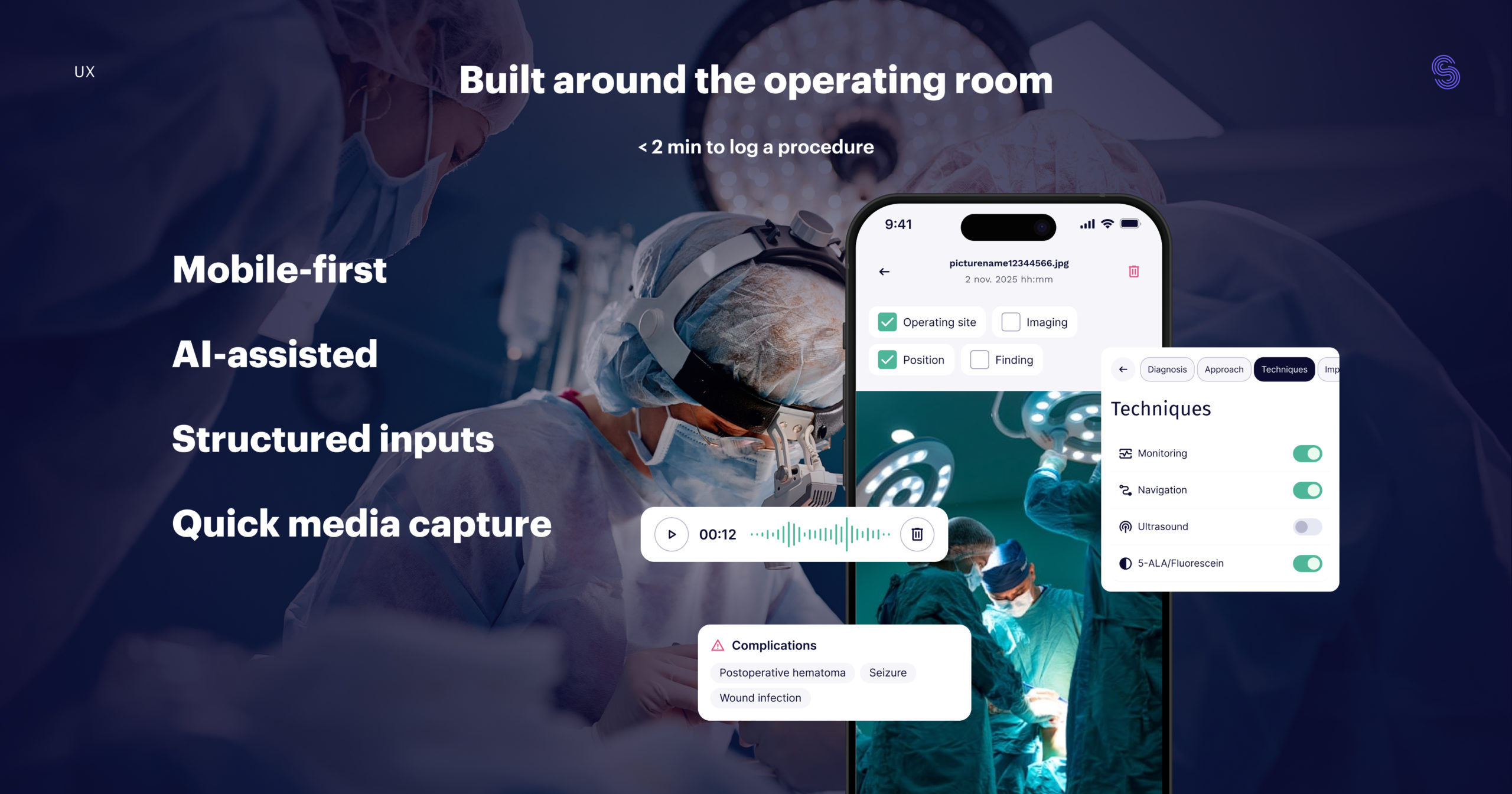
Surgeons do not work in front of a computer all day. They move between operating theatres, consultations and sometimes several hospitals. The mobile phone is the only tool they can have with them at all times, outside the sterile field.
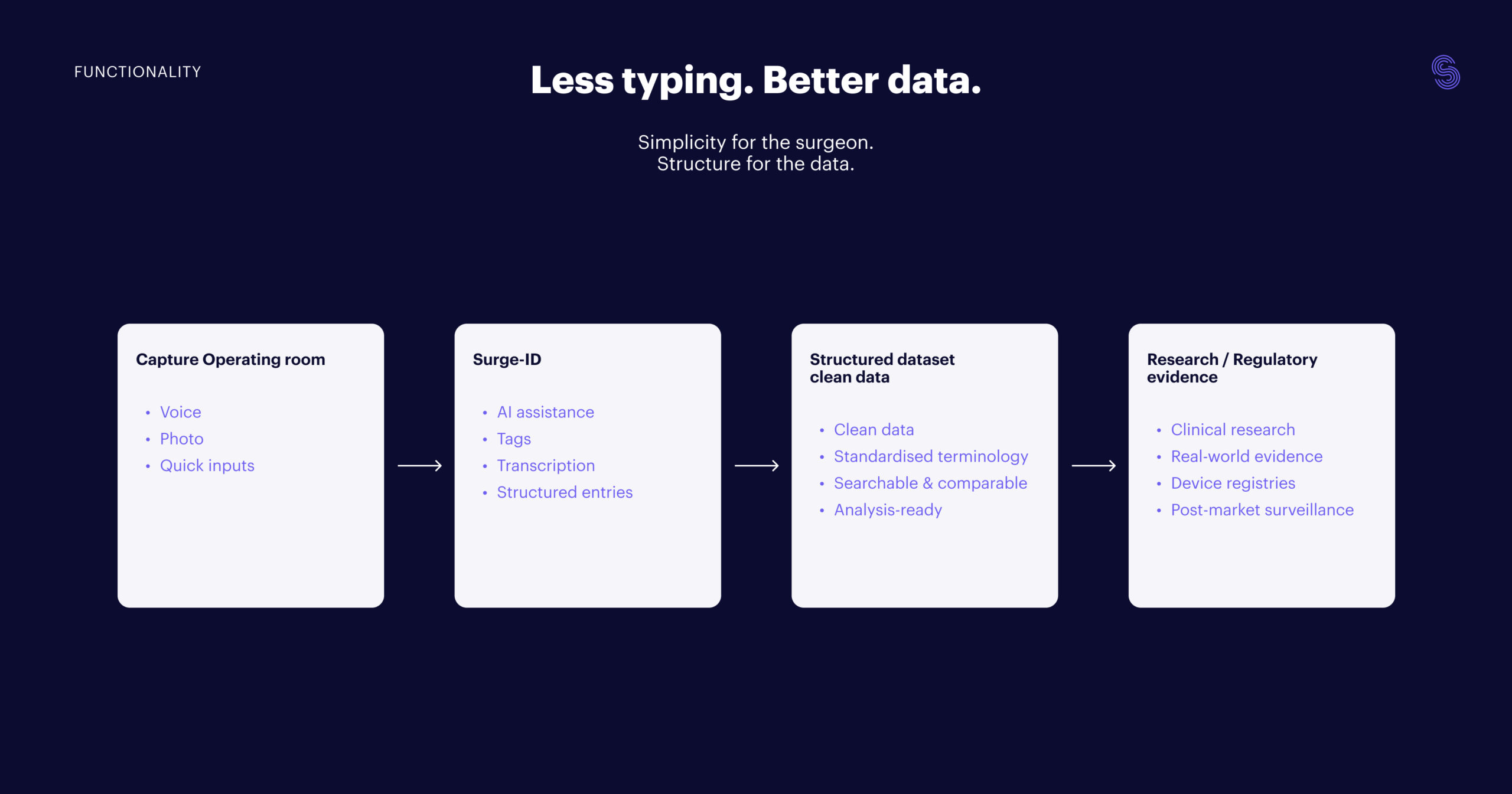
SurgeID therefore makes it possible to capture information at the most relevant point, without disrupting the procedure, and then automatically structure it for subsequent use.
The goal is simple: less than two minutes to document a procedure, without turning the surgeon into a data-entry operator.
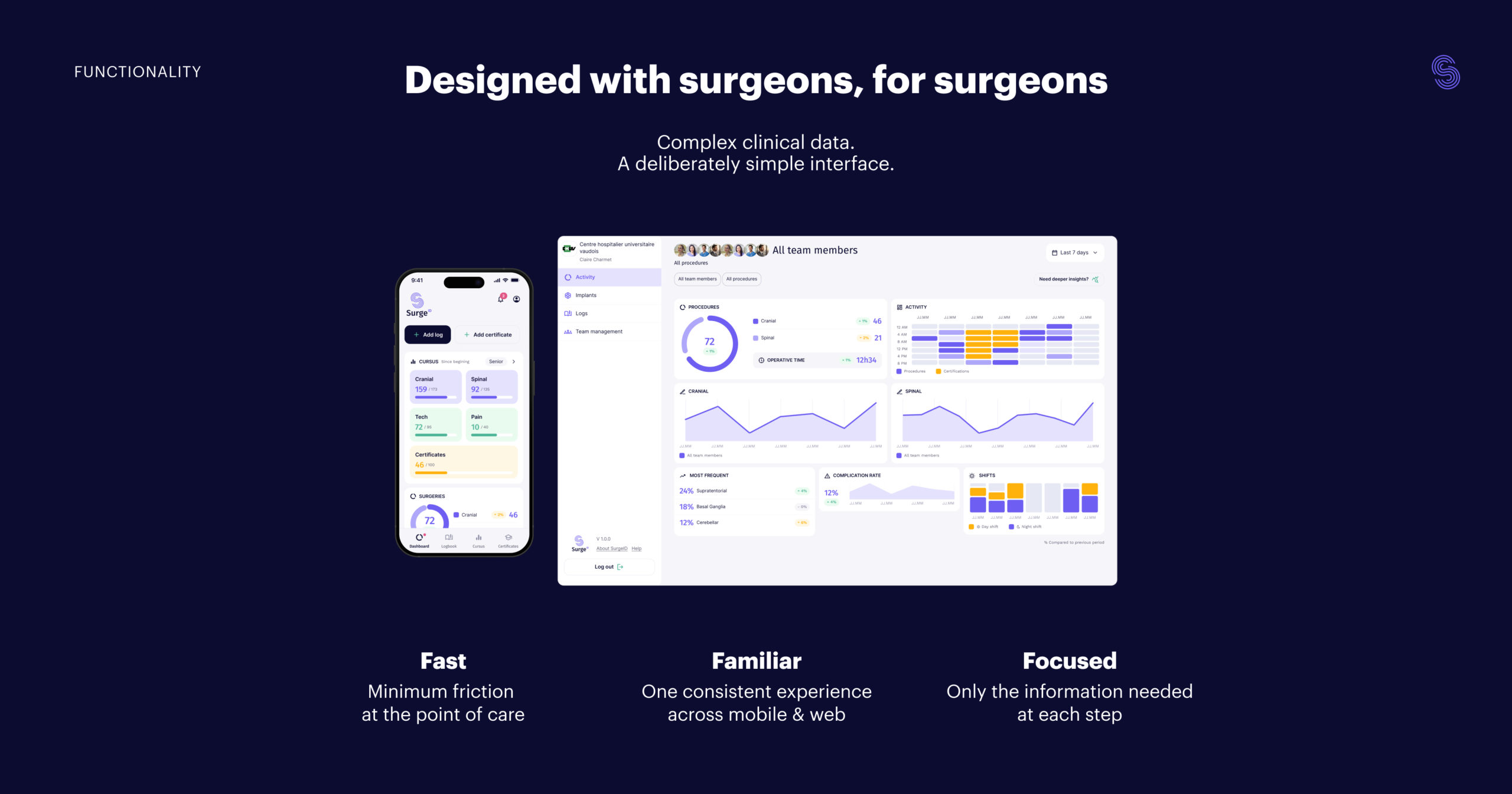
Some features intended for staff working at a fixed computer are also available through a web version.
Our key decisions and trade-offs
In practice, designing SurgeID required making complex trade-offs between usability in the field and technical rigour.
1. Digitising what already exists… but to what end?
A common mistake in this type of project is to simply reproduce the paper form (originally in Excel or Word) in an application. Such projects often lead to the same outcome: significant investment with adoption lost from the very first client trials. Clearly, a solution of this kind would not have improved the situation.
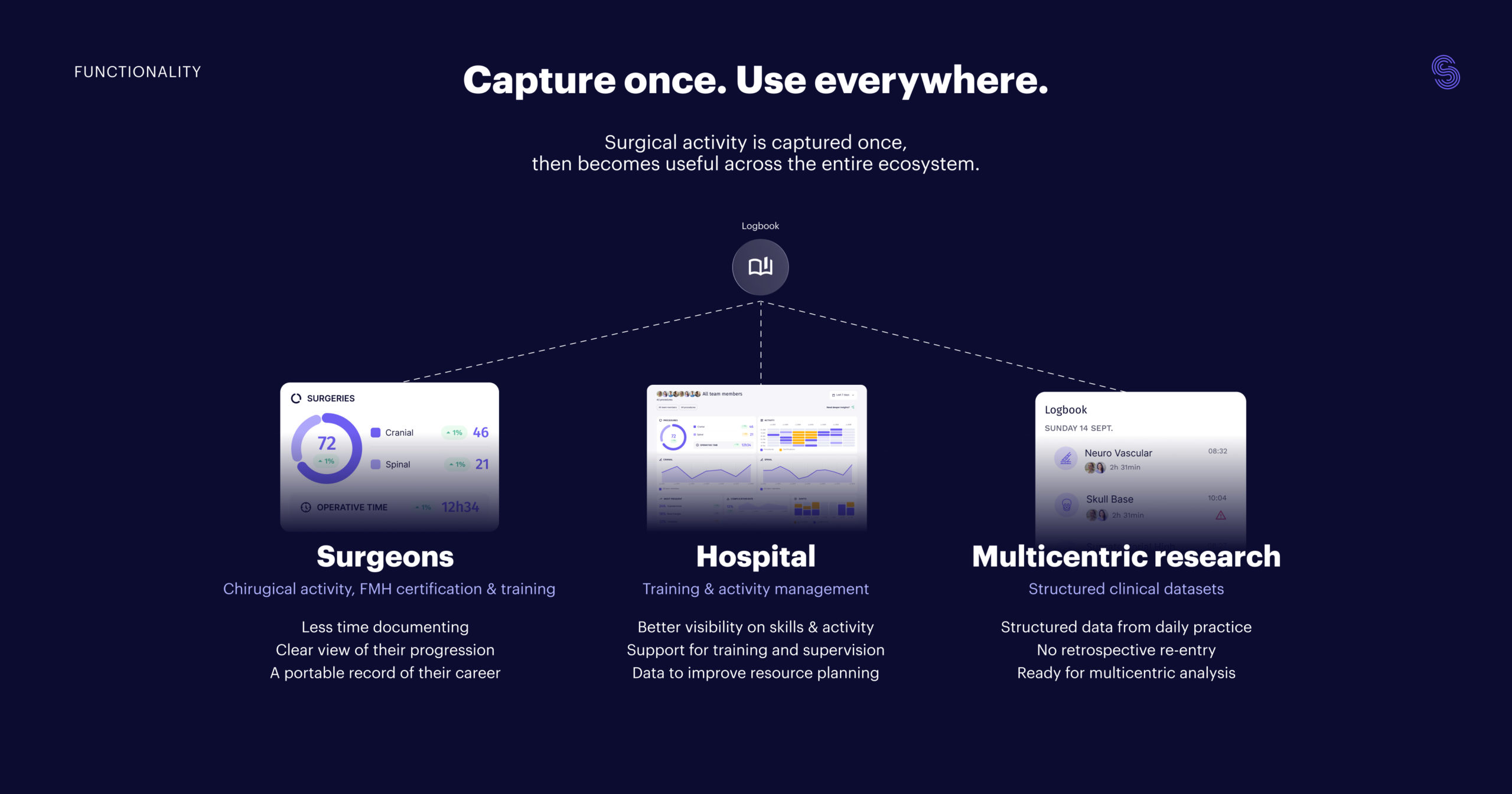
To move beyond simple digitisation, SurgeID shifted where the value lies. It is no longer in data entry, but in what the application does with the data:
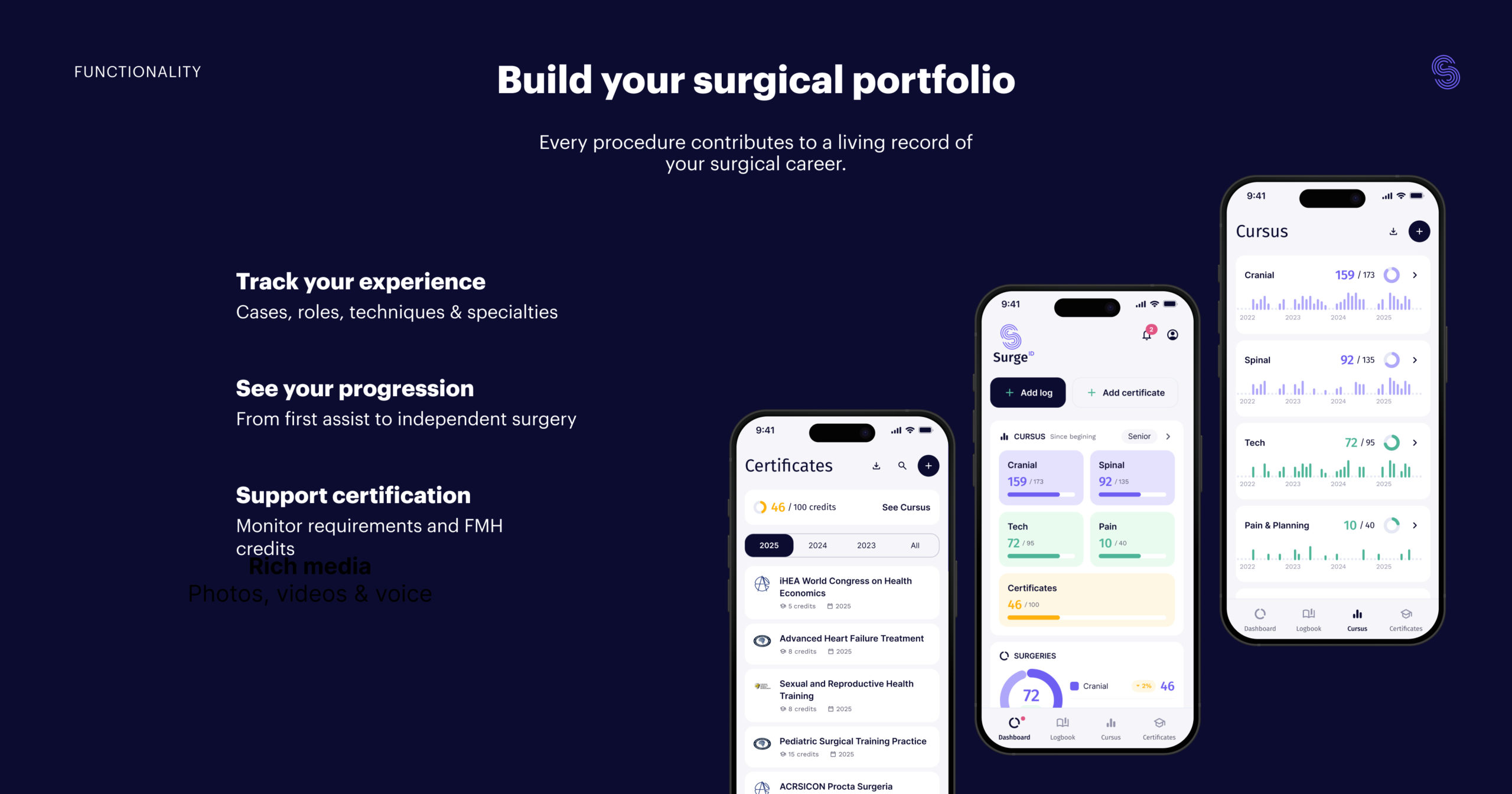
- Automatic, always up-to-date generation of a digital logbook, which can of course be exported in the required format.
- Measurement and tracking of progress, procedure by procedure, ultimately towards FMH certification (the “magic points” system).
- A planning dashboard for department heads and training supervisors.
- A structured, high-quality data catalogue that enables research to be immediately used as a registry, without duplicate data entry or retrospective re-entry.
A digital tool should not create additional workload. SurgeID is a catalyst that simplifies a legal requirement and turns it into a career development opportunity.
2. Balancing ease of use and data quality
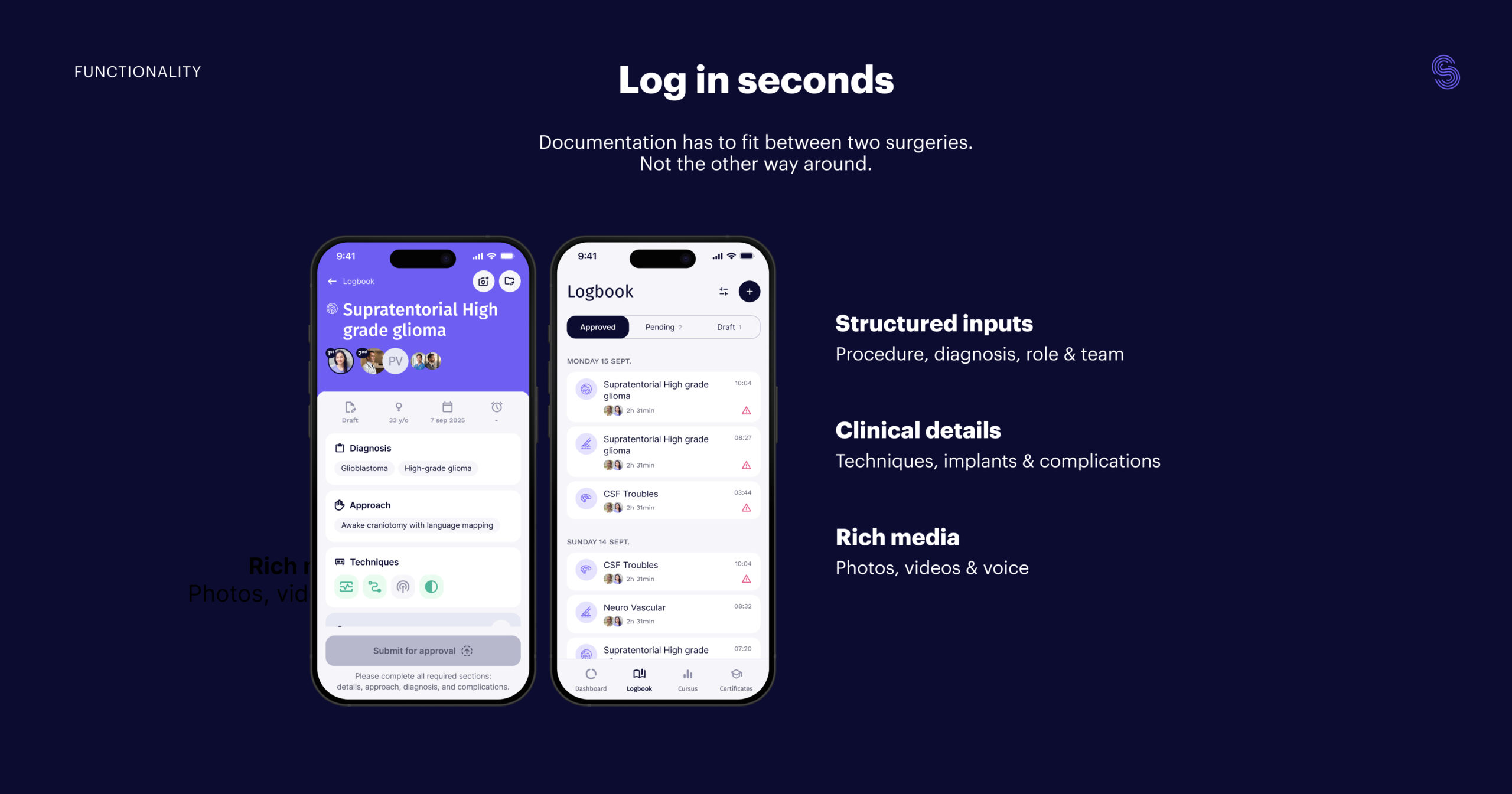
A surgeon cannot fill in lengthy forms in the operating theatre. Free-text data, meanwhile, is difficult to use for analysis. The trade-off was to prioritise multimedia capture: voice, photos and video. This is combined with a predefined log-entry structure, designed with surgeons both upstream (pre-filled log) and downstream (AI transcription). The impact is twofold:
- A significant reduction in the time surgeons spend documenting their procedures,
- The guarantee of clean, high-quality final data that can then be integrated into a management dashboard or an FMH certification record.
3. Security by Design: making data accessible without compromising security
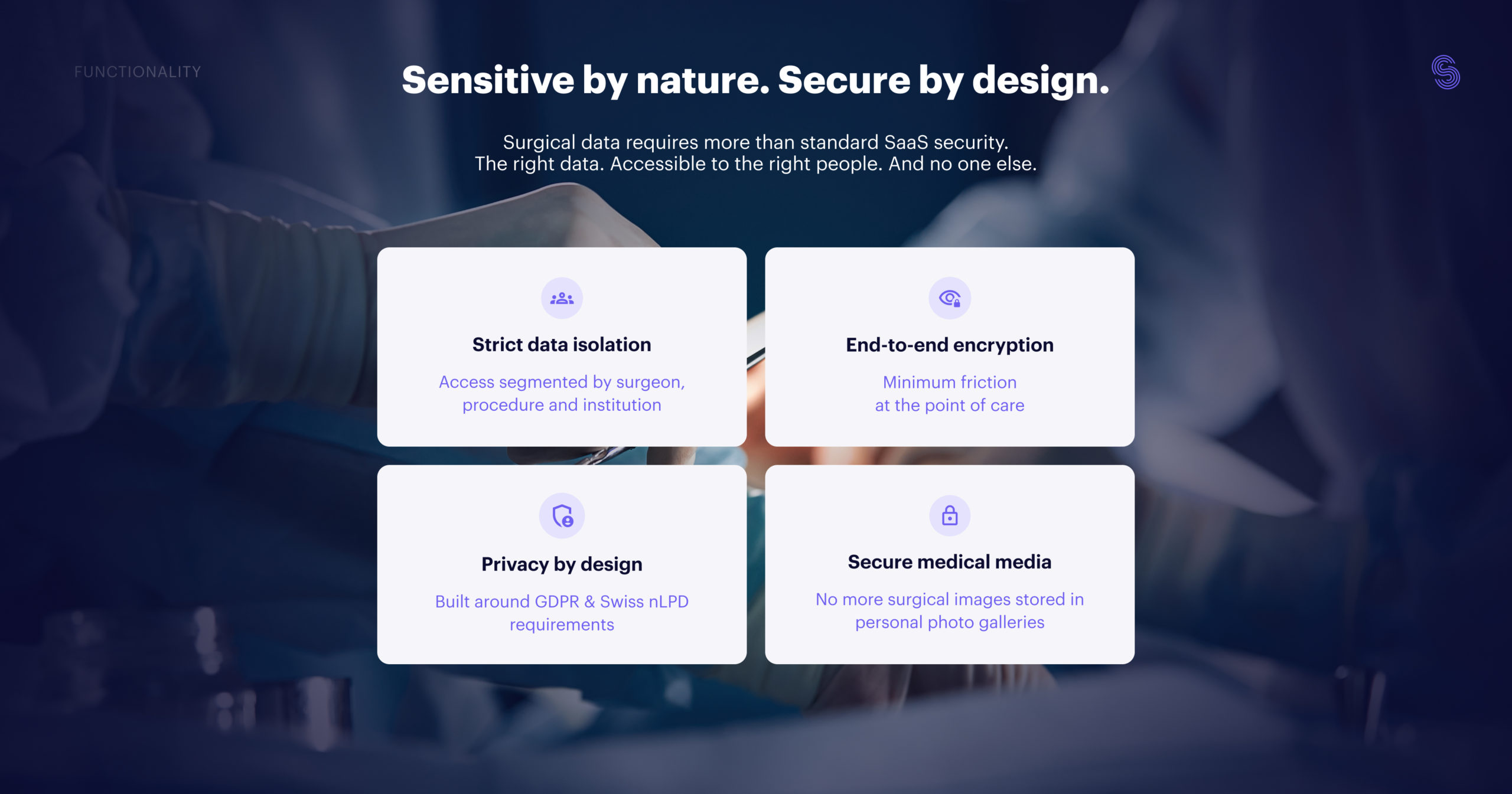
The choice of Flutter for mobile and web development made it possible to unify the user experience. However, this accessibility could not come at the expense of security. The risk of a data breach on a centralised SaaS platform was simply not an option.
The technical trade-off was to build an end-to-end encrypted infrastructure where access is strictly segmented by procedure, surgeon and institution.
This secure compartmentalisation was designed to comply with nFADP and GDPR standards. External legal support specialising in health data protection helped ensure compliance that goes beyond European standards.
In other words, a log created at Hospital X is not visible to Hospital Y.
A combination of practical ergonomics and technical rigour
A combination of practical ergonomics and technical rigour
A combination of practical ergonomics and technical rigour
Apptitude’s approach: business, design, tech
SurgeID is a good example of the type of project we particularly enjoy working on: complex challenges where success depends not only on the quality of the interface or the technology, but also on the ability to bring together business needs, user experience and software architecture.
Our involvement covered the entire process, from understanding the business model through to UX/UI design and platform development. This continuity allows us to avoid a siloed approach, where strategy is defined on one side, the product designed on another and the technology chosen at a later stage.
For SurgeID, this approach enabled the product and its technical foundations to evolve together, as we refined our understanding of user needs, hospital constraints and deployment opportunities.
It is this ability to connect business, design and tech that allows us to support complex products, particularly when data, business constraints and security become defining elements of the product.
Making the logbook a useful tool for surgeons and hospitals
With its SurgeID product, Medical AI SA has done more than simply replace paper. It has laid the foundations for a Swiss and European standard for surgery. By opting for uncompromising security and a strict data structure, the mobile application transforms the administrative burden of operative data into a strategic tool for surgeons, hospitals and research.
What if digital could help you, too, shape the standards of your industry?
Have you identified an opportunity for transformation or would you like to take your thinking further? Let’s discuss your project and explore together the levers that could make a difference.