
Search in customer portals, catalogues and content databases is changing. Semantic models make it possible to find content based on what it means, not just on the keywords it contains.
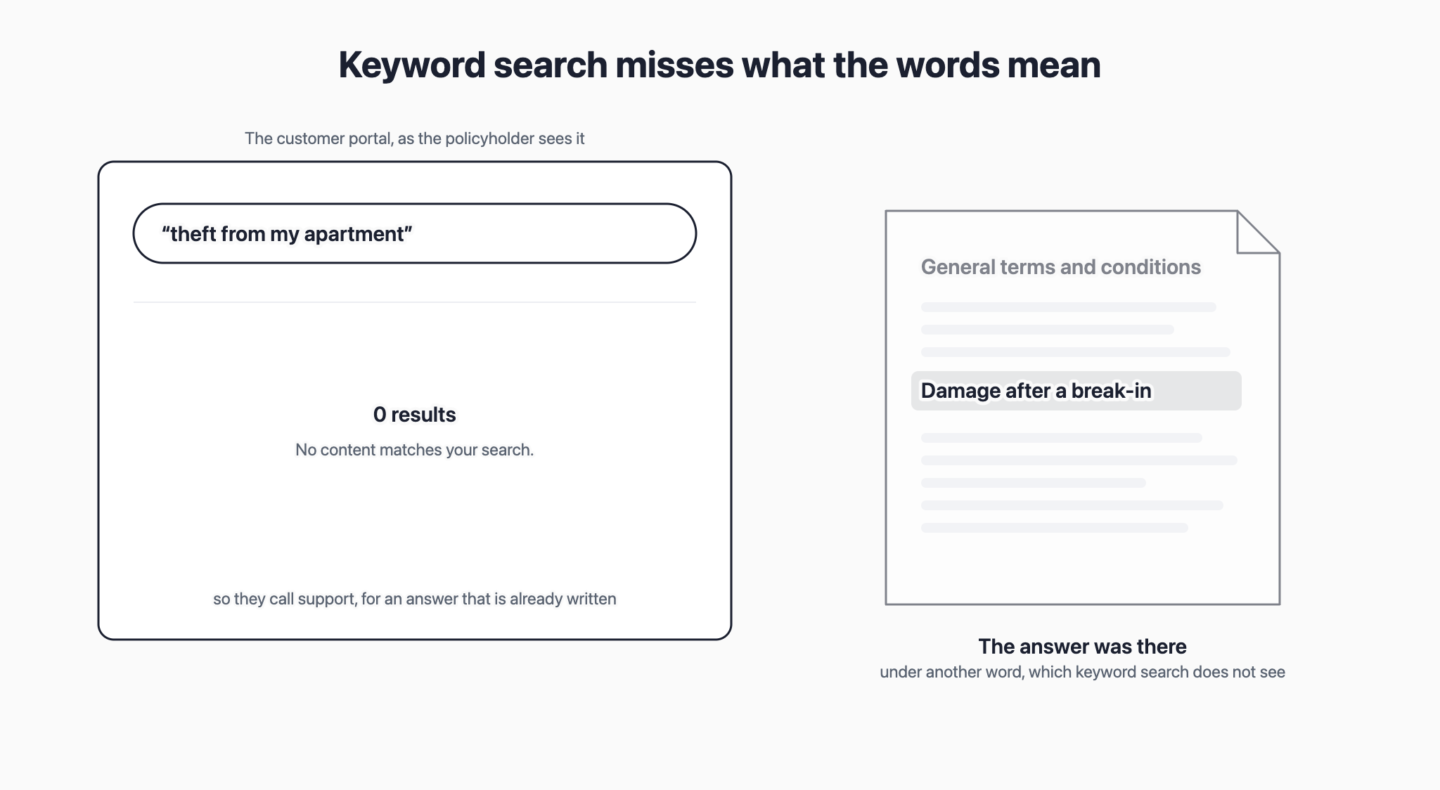
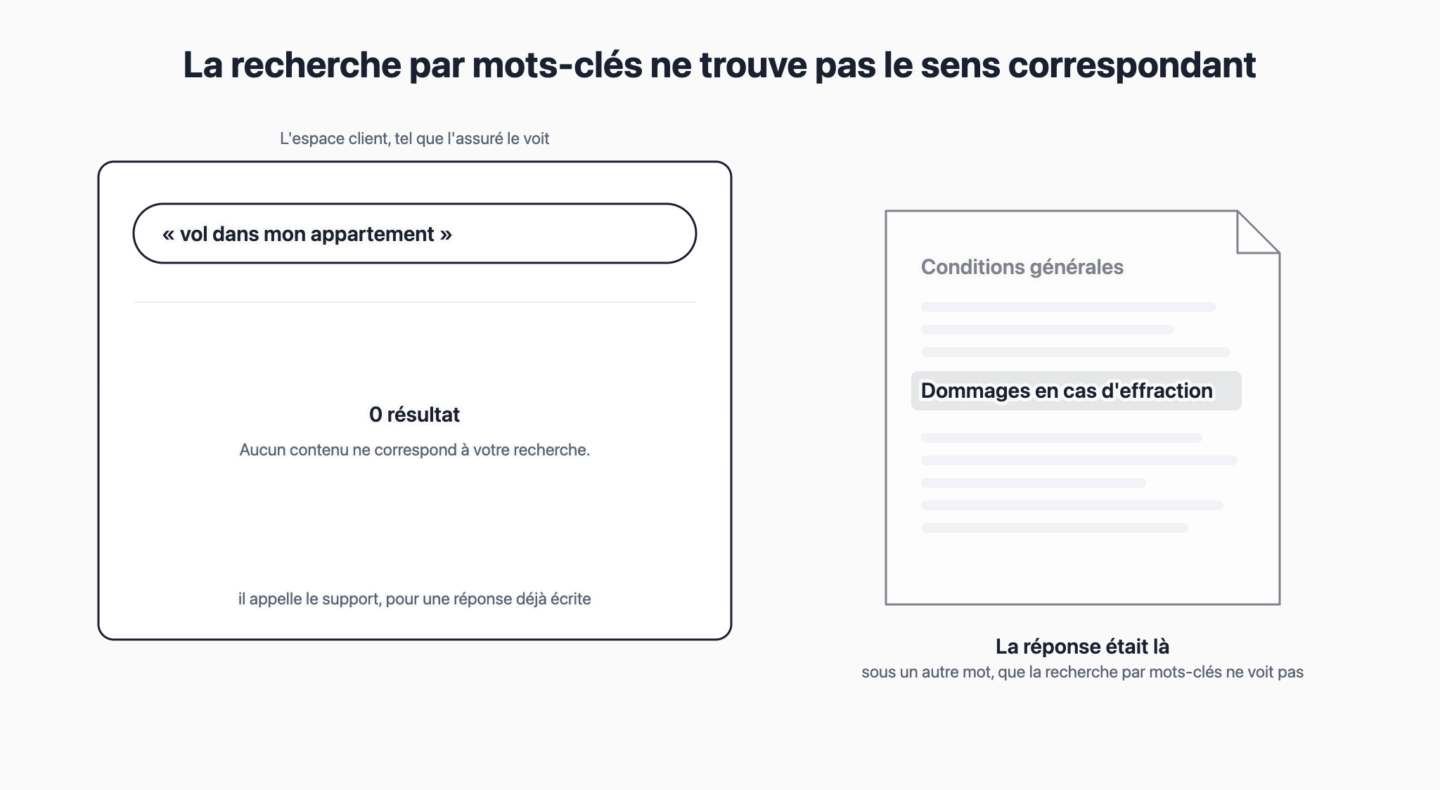
For example, in their insurance customer portal, a policyholder types “burglary in my flat”. Zero results. Yet the answer was in their policy terms, under the word “break-in”. They call support for an answer that has already been written. With semantic search, the same query finds the right answer behind the relevant clause.
We built and tested it across several business cases: an insurance customer portal, a food catalogue, an inventory of space objects, and a citizen platform dealing with natural hazards. Here is what changes, and what we learned while building it.
What semantic search changes for your users and teams
- They find things using their own words. A question in plain language finds content written in business terminology. Searches with no relevant results become less common, and users are more often able to find the information without having to contact support.
- Language becomes less of a barrier. A page written in German or Italian, never translated, can answer a question asked in French. For a Swiss organisation with multilingual content, the benefit is immediate.
- They discover what they were not looking for. The system understands what the user is trying to do and suggests related content: similar cases, related pages, comparable products.
- Less maintenance. With keyword search, the team spends its time compensating for limitations: adding synonyms, adjusting the index to match the way people search, and writing rules based on the content. Semantic search reduces the need to manually manage every possible synonym and formulation. The time saved can be spent on the search experience: which results to show, in what order, and with which filters.
Three real-world cases: product catalogue, multilingual inventory, citizen platform
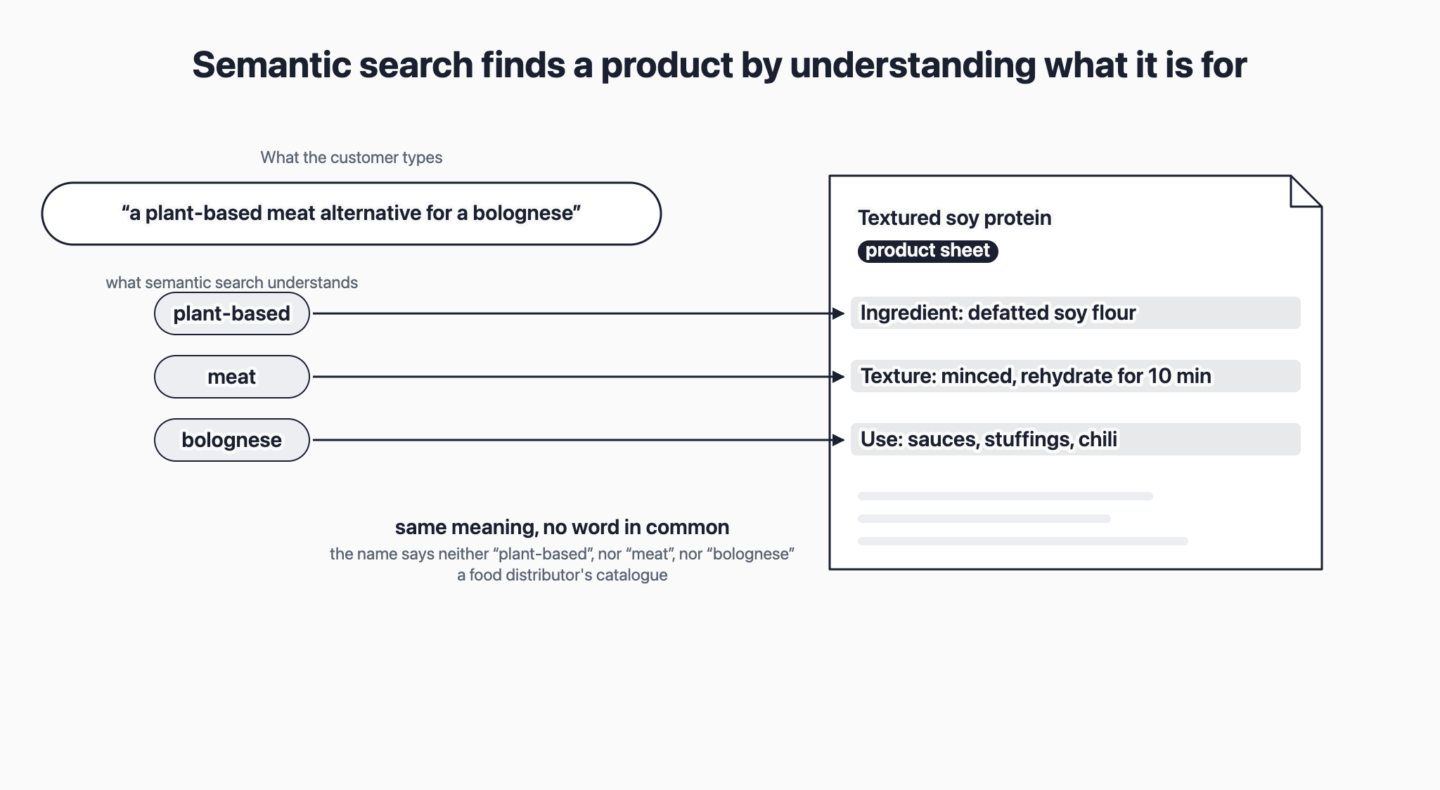
In a food distributor’s catalogue, “a plant-based alternative to meat for a bolognese” brings up the “textured soya protein” product page. None of the words in the search appear on the page. Semantic search understands the product based on what the page describes: its ingredients, texture, and use.
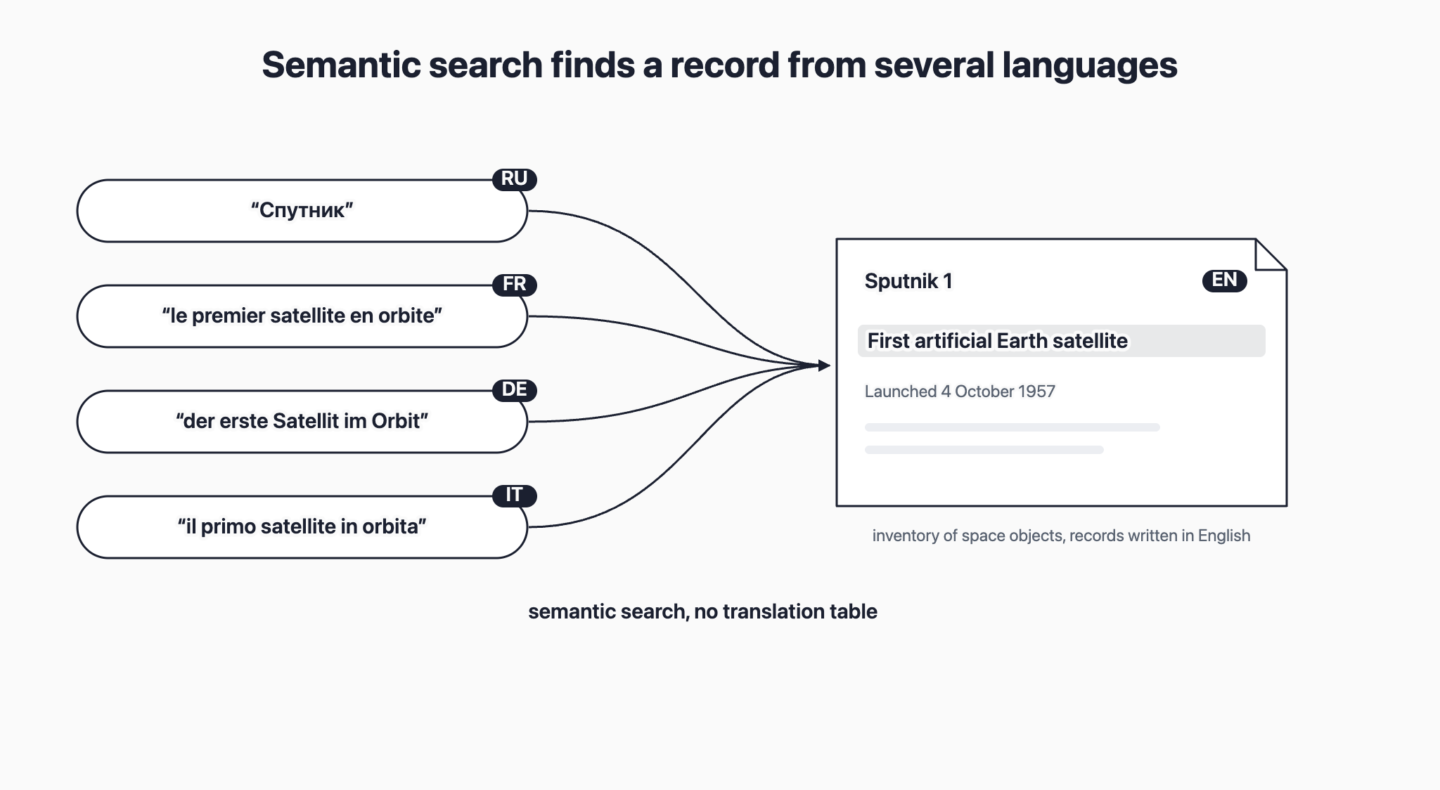
With a suitable multilingual model, a query in French, German, Italian or Russian can find content written in another language, without manually translating every page.
In an inventory of space objects, “Спутник”, typed in Russian, finds the “Sputnik 1” page, written in English. The same question asked in French, German, or Italian leads to the same page, without any translation table.
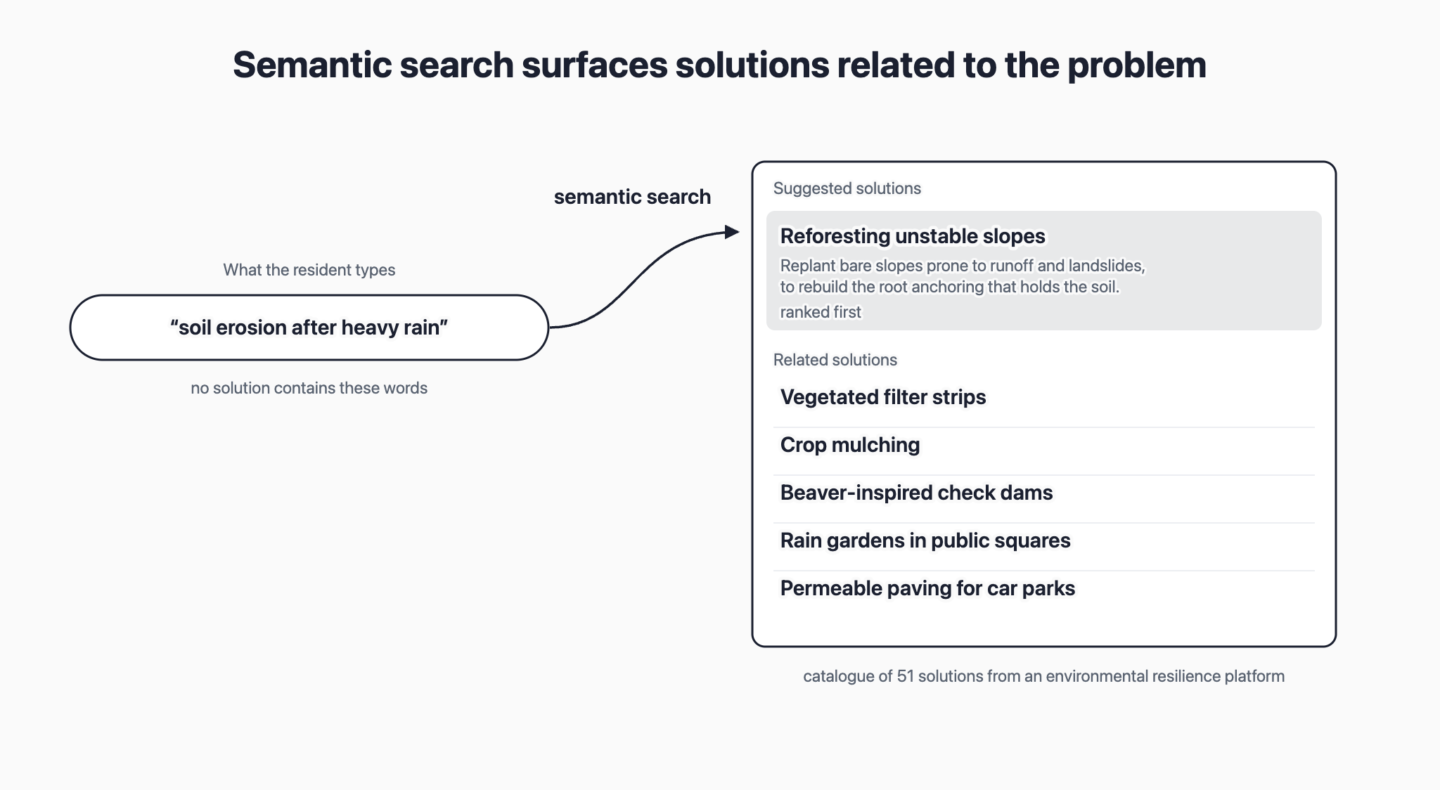
A mountain municipality provides its residents with a platform of solutions for natural hazards. They search a catalogue of 51 solutions using their own words. “Soil erosion after heavy rainfall” puts “Reforestation of unstable slopes” at the top, followed by related solutions: vegetated filter strips, crop mulching. The resident describes their problem, and the catalogue responds with solutions, including ones they would not have known how to name.
What it requires: hybrid search, a test set, data in Switzerland
- Your data can stay in Switzerland. In the concerned deployments, the processing and storage components are hosted in Switzerland. The data is not sent to an external service to perform the search. In healthcare, insurance, and industry, this is often a prerequisite, and this is how we deployed it on these projects.
- Quality depends on your content. Contradictory or outdated pages lead to poor results. An out-of-date database returns old content as if it were still valid.
- Build a set of 20 to 50 real user questions, with the expected answer for each one. This is what shows whether a change improves or degrades the results, and the set grows over time.
- Stay hybrid. Semantic search alone can confuse two codes that differ by one digit. Keyword search still has its place when the reference is known: policy number, batch number, product code. Effective search combines both.
- Track every search from day one. The query, the results returned, the click or the absence of a response. Every search becomes data: it shows what your users are looking for, in their own words, feeds the test set, highlights missing content and measures the product’s effectiveness over time.
Semantic search, the foundation of your AI assistant (RAG)
An assistant that answers based on your content needs the same thing as your users: finding the right passage from a question asked in ordinary language. That is what semantic search does, which is why we put it in place before any AI assistant.
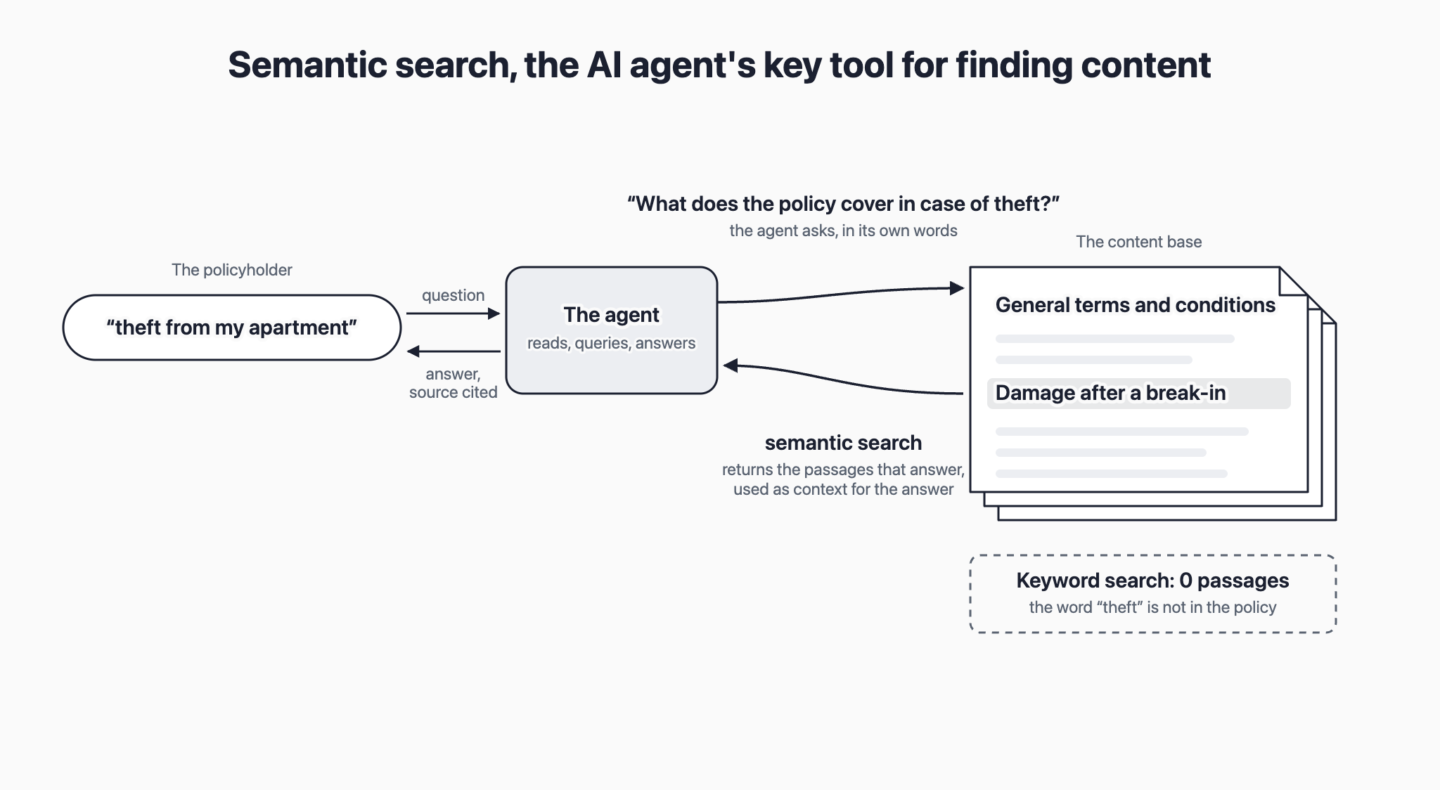
The agent formulates a question, the search engine finds the most relevant passages, then the model generates an answer based on this context and refers back to the sources used. This is known as RAG, and it will be the subject of a future article.
Getting started with semantic search on your data
A set of content, an audience, a specific question? We set up semantic search on your data, measure its relevance using real user questions and build the foundations needed to improve it over time.