HeartCare builds on the Datamama project, with a renewed ambition: to connect these stakeholders through a single tool in order to improve the understanding and coordination of hypertension management.
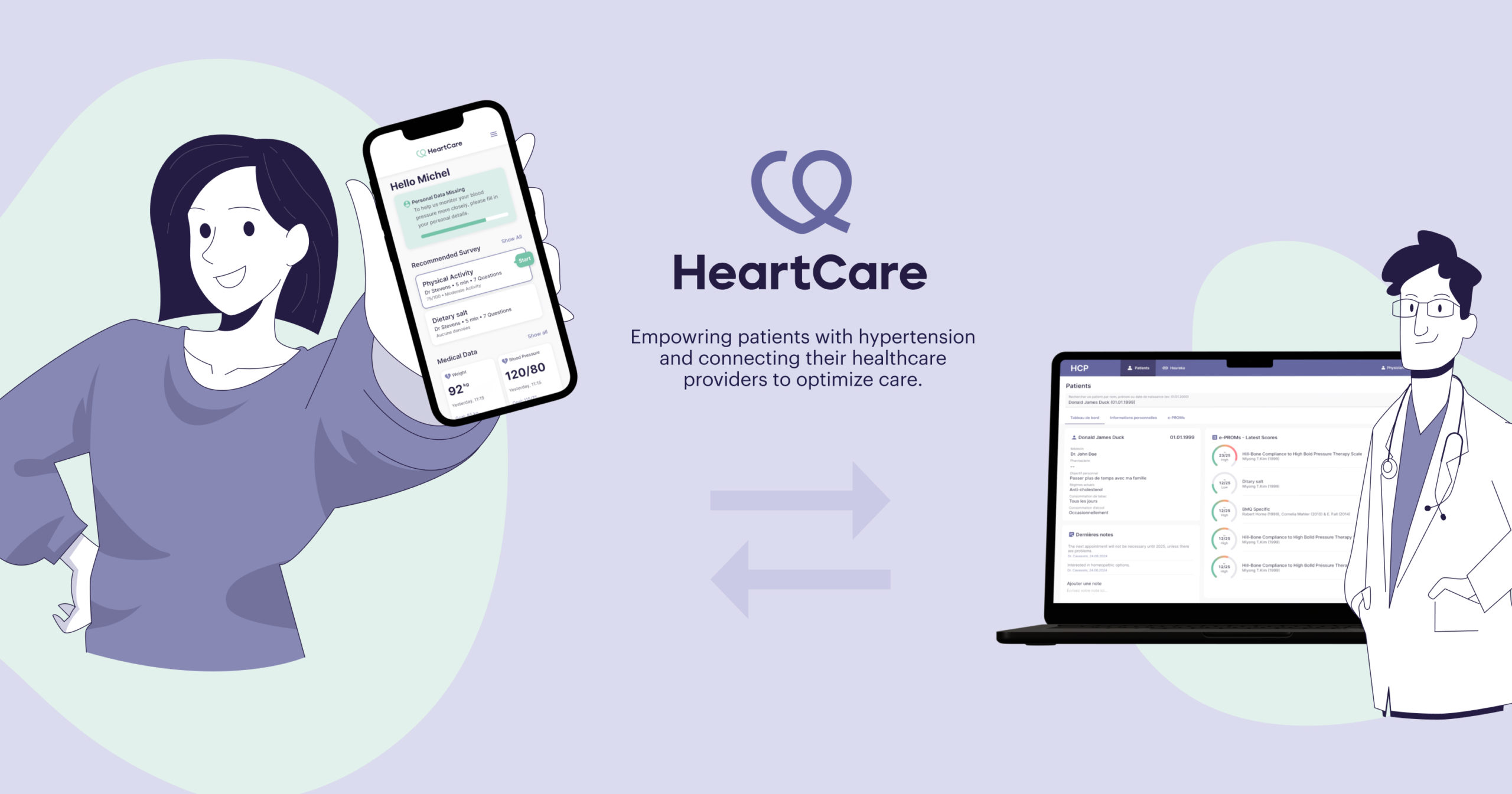
HeartCare aims to improve the understanding of hypertension care by supporting research objectives, patients self-monitoring and collaboration between patients and their healthcare providers. The project is rooted in a research-driven approach, with concrete challenges related to participant recruitment and real-world feasibility evaluation, while making a demanding academic framework more accessible and engaging for users. The project was also selected as finalist for the SantéNext Innovation Award.
Fragmented medical monitoring in everyday care
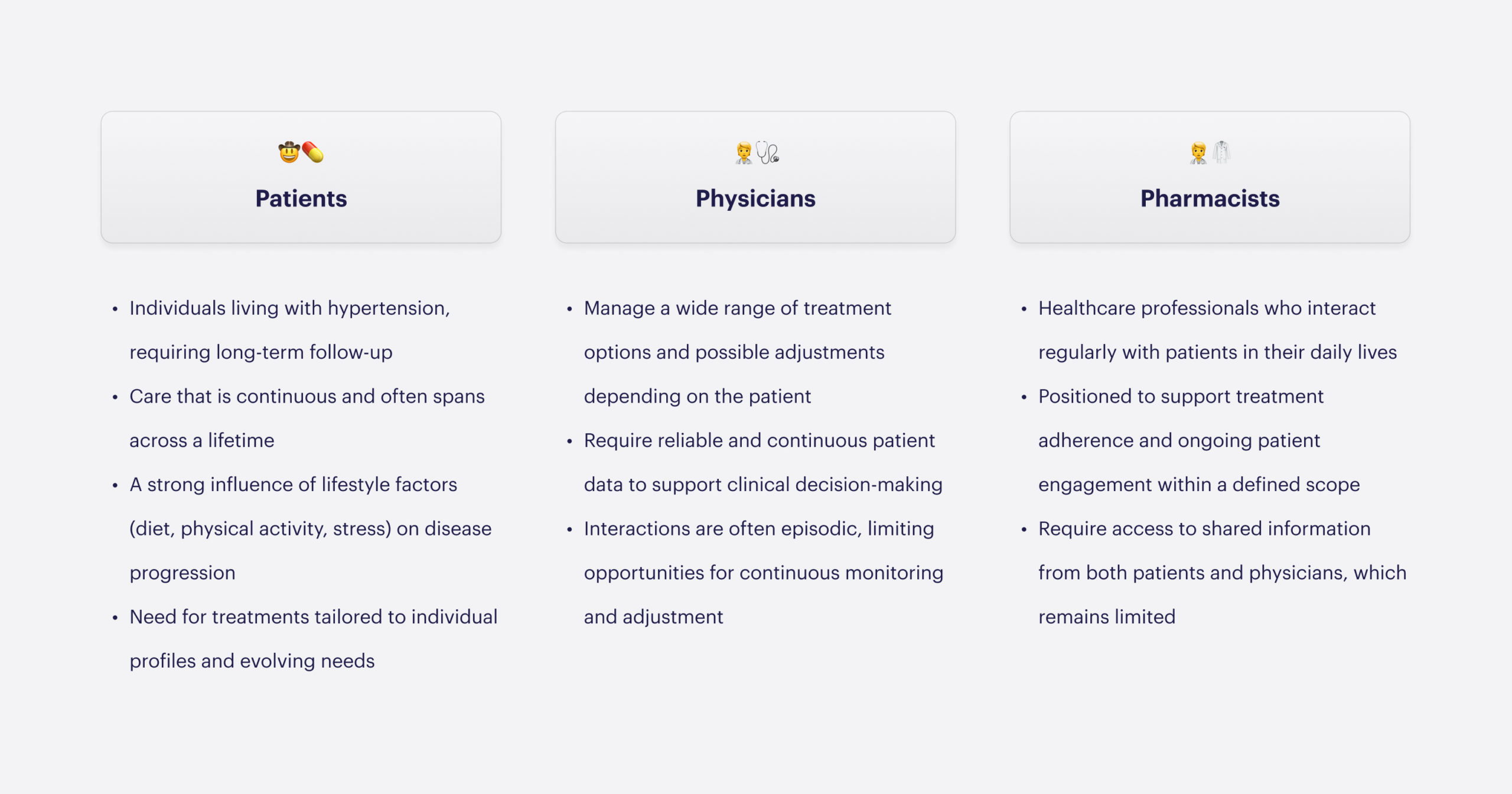
Hypertension is a chronic condition that requires regular monitoring and adjustments over time. It is also strongly influenced by lifestyle factors: diet, physical activity and stress, all have a direct impact on its progression.
This makes it a multifactorial condition, where each patient requires highly personalised care. However, in practice, information sharing between patients and healthcare professionals remains limited. Each actor holds only a partial view, which limits the delivery of coordinated, personalized care:
- Patients live with their condition daily, but often lack simple tools to accurately communicate lifestyle factors and lived experiences.
- Doctors make complex decisions during infrequent consultations, often relying on limited structured data and brief clinical encounters.
- Pharmacists interact with patients regularly, but generally lack access to the broader information needed to provide comprehensive, patient-centered support.
A collaborative project led by an academic consortium
The project was carried out with a broad academic and medical consortium, including notably the University of Bern, the Haute Ecole d’Ingénierie et de Gestion du Canton de Vaud HEIG-VD, the EQUAM Stiftung and other public health stakeholders.
Apptitude played a key role in structuring the identity and designing the product for end users, translating medical forms into simple and engaging user journeys. Our design team worked on:
- Defining the new name, HeartCare
- Creating the brand identity
- UX and UI design for the application and platform
- Adaptation of communication materials (teaser video, landing page, flyer, social media visuals, app store assets, etc.)
- Creation of informative videos to support recruitment for the pilot study
““The work carried out by apptitude has been crucial in shaping a true identity for our platform. Our collaboration was marked by strong responsiveness and a highly cooperative approach, which greatly facilitated the project’s progression.””
Alessia Romer – PhD Candidate AT BIHAM, University of Bern, and Pharmacist
The technical development was carried out by the IICT teams at HEIG-VD. This setup required close coordination between design and technical teams, with specific integration constraints, allowing efforts to focus on what matters most: clarity of the experience, relevance of the information, and the value of the app for users in their daily lives.
Building an accessible identity from a scientific project
The project initially started under the codename HYPROM, directly derived from its scientific context (hypertension + PROMs). While this type of naming is relevant in a research setting, it remained difficult to understand and communicate to patients.
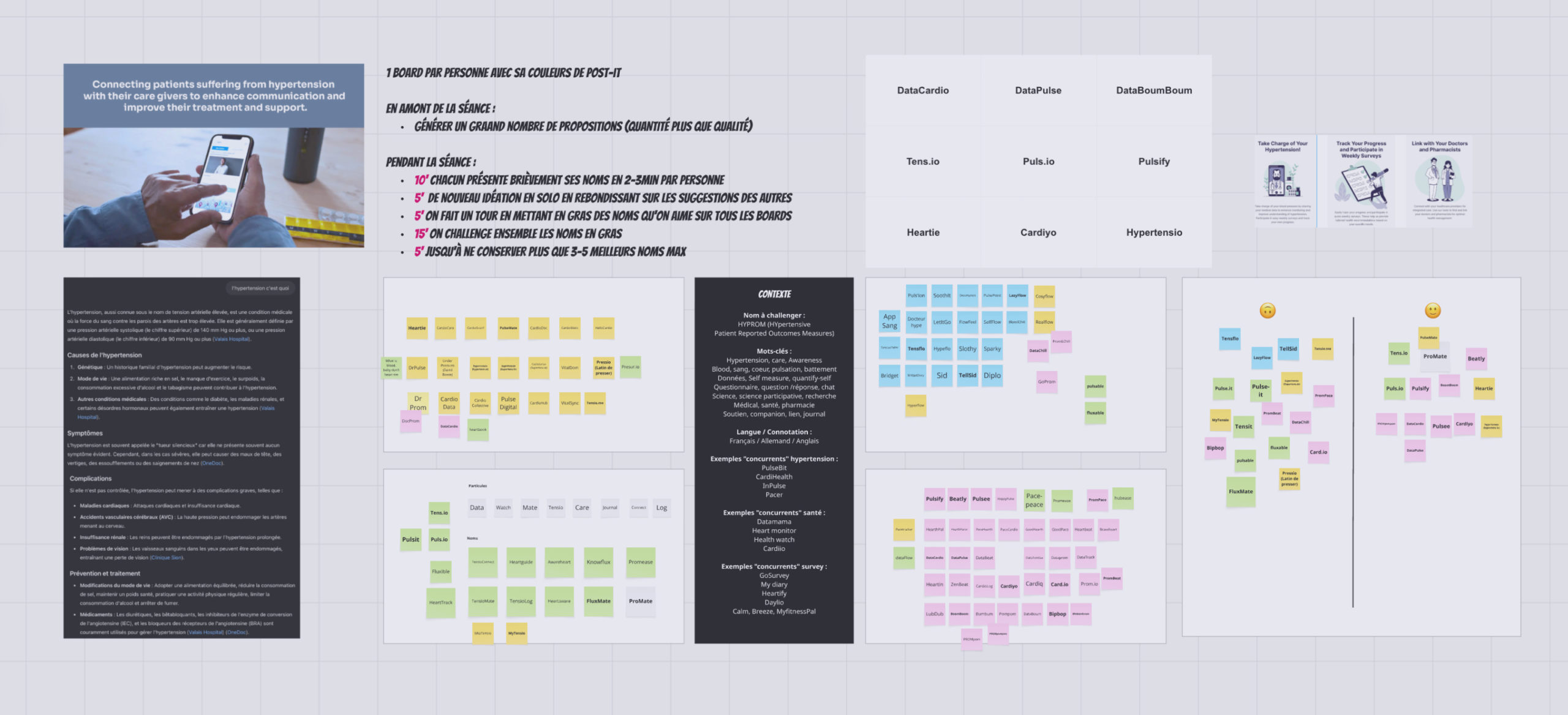
We therefore facilitated several naming workshops internally and with the project team to explore more suitable directions, while remaining credible within a scientific context. The objective was to find a name that was simple, reassuring, and easy to remember.
The name “HeartCare” emerged as it evokes both the heart, care, and proximity. This work was extended through the creation of a coherent visual identity, designed to be serious without being institutional, and sufficiently engaging to encourage patient participation in the study.
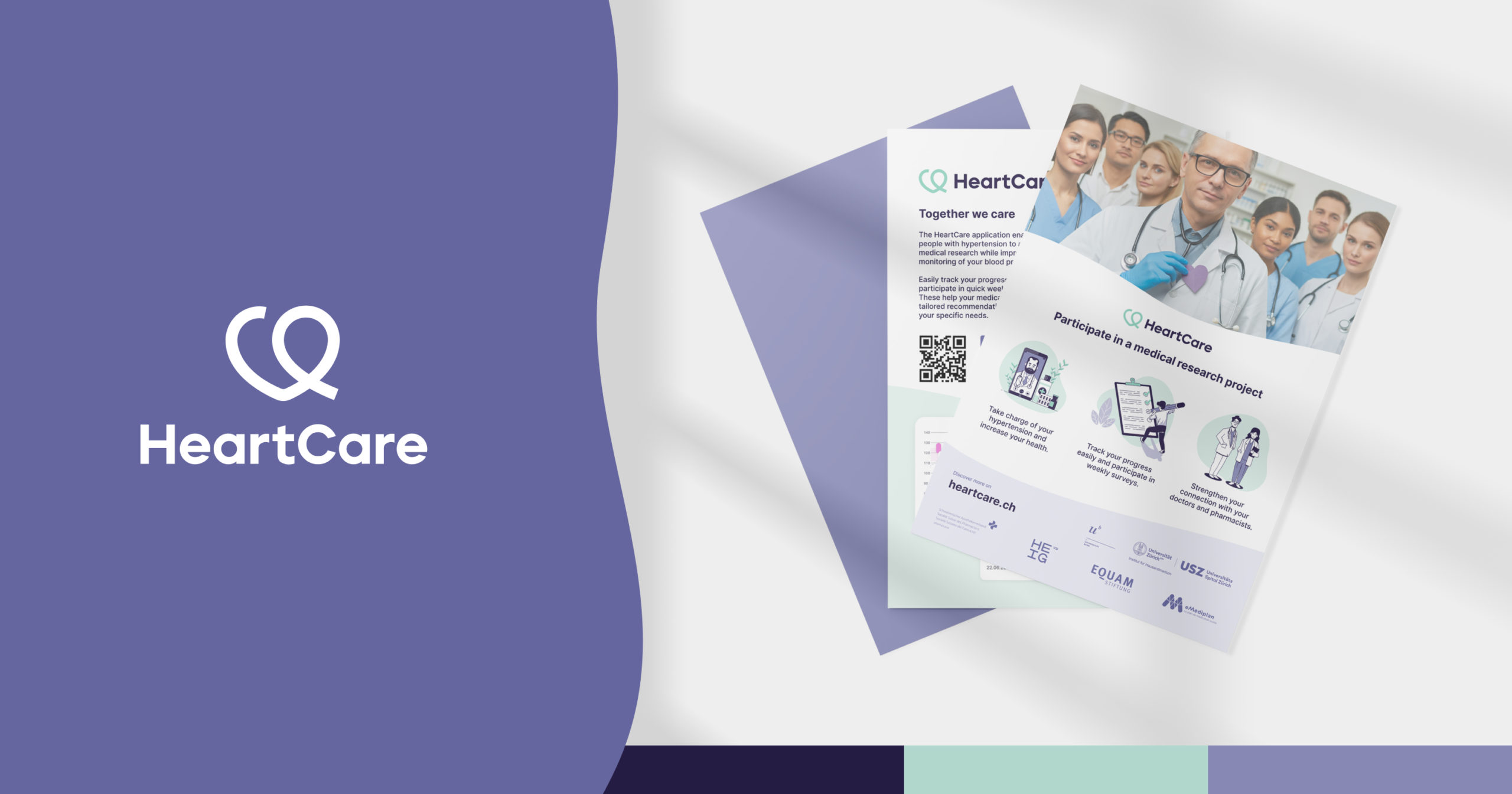
From a code name to an engaging brand
The HeartCare ecosystem is built around two complementary interfaces. On the patient side, a mobile application allows users to enter data over time, whether health indicators, PROMs, or lifestyle-related information. The experience was designed to fit easily into everyday life, with a progressive and low-friction data entry approach.
PROMs (Patient-Reported Outcome Measures) refer to standardized, validated questionnaires that patients fill out to directly report their own symptoms, daily functionality, and overall health-related quality of life. In Switzerland, their use is notably promoted by the Federal Office of Public Health as part of efforts to improve the quality of care.
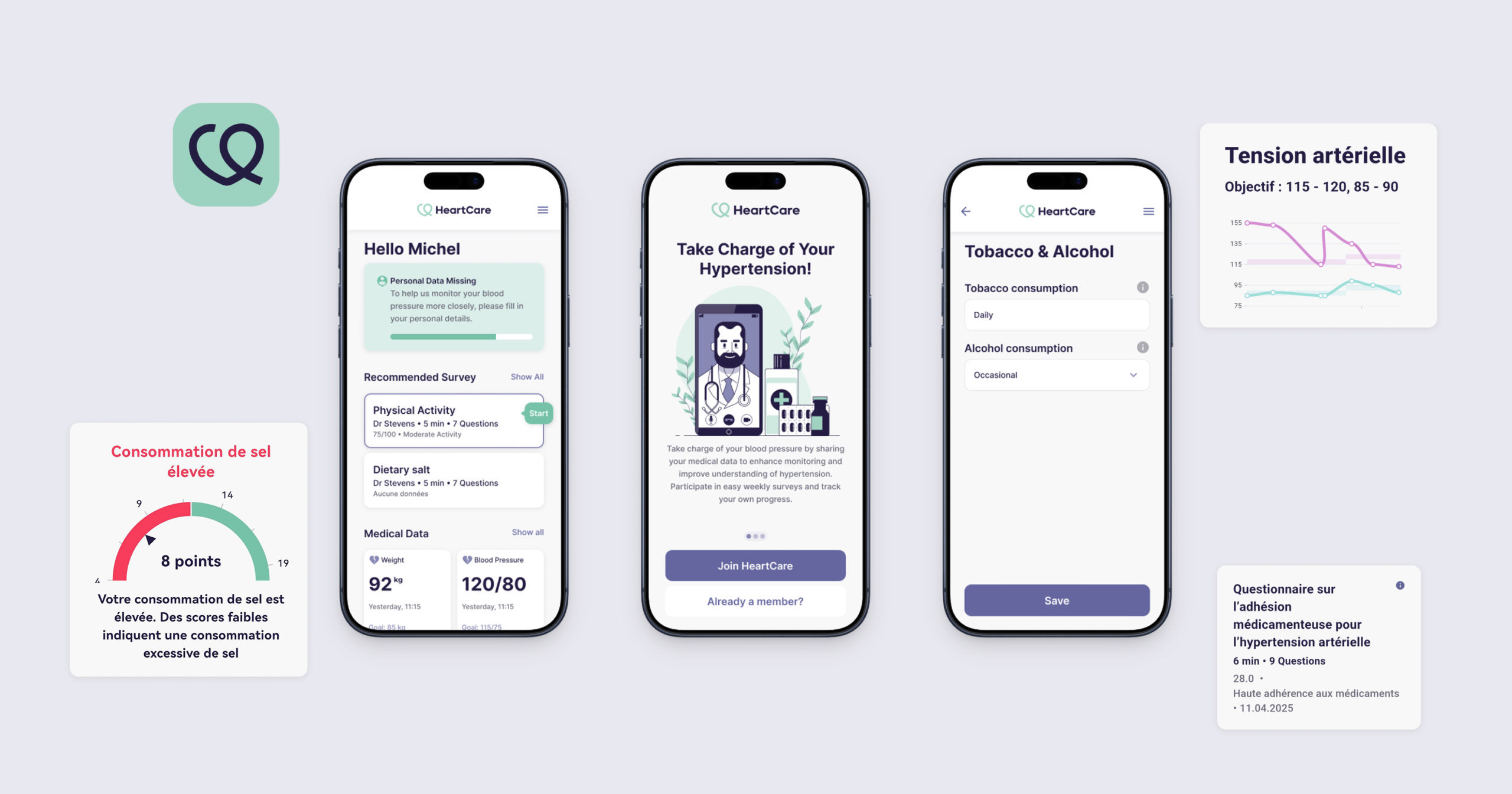
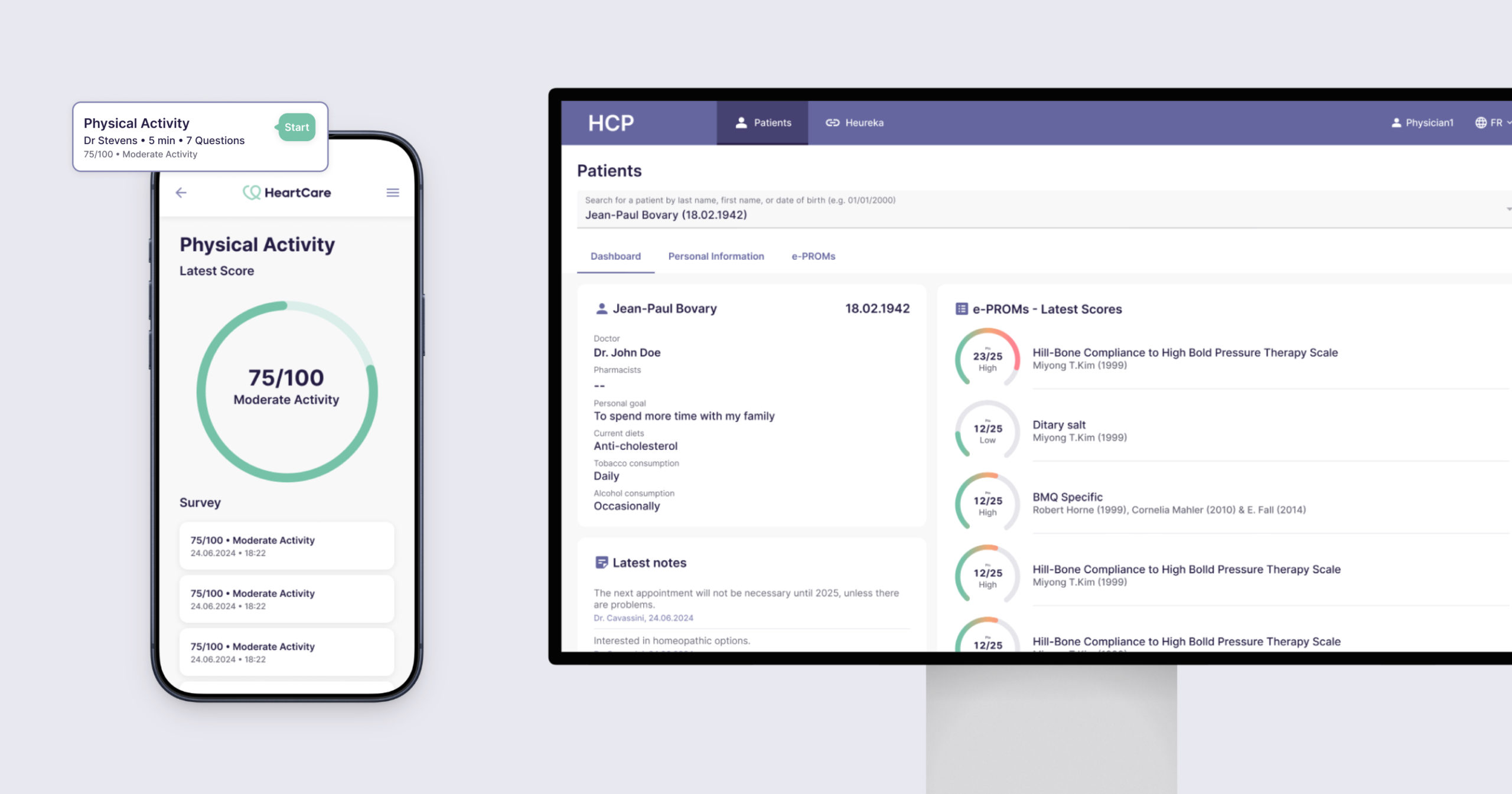
On the healthcare professionals’ side, a platform enables the analysis of this data in order to better understand patient experiences over time, monitor progress and adjust treatments where necessary. The main challenge was to make these interactions smooth and understandable, despite the underlying complexity. The overall system aims to create a more continuous link between the different stakeholders, by facilitating the flow and readability of information.
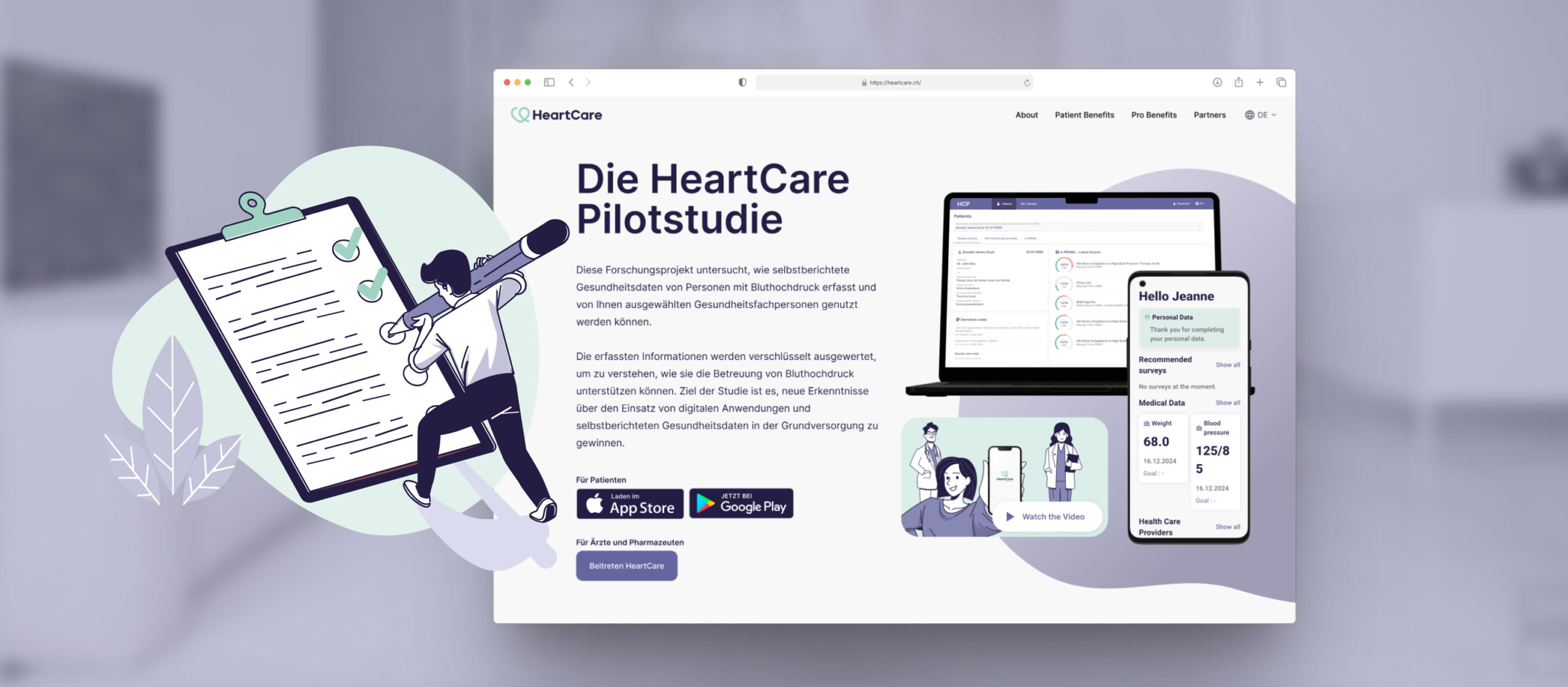
Communication materials to engage and support recruitment
Beyond the product itself, significant work was carried out with the team on communication materials to support patient recruitment for the study. This included the creation of a flyer, a landing page, and several explanatory videos. A short teaser video was designed to spark interest in the project, while a series of more detailed videos present how it works and the benefits for participants.
These materials were designed to simplify concepts that are sometimes complex, while remaining accessible and reassuring. The combined use of personalisation, animation, and voice-over in particular helped to make the message more engaging and human-centred. Overall, this contributes to a coherent system that supports the adoption of the project.
A collaboration dedicated to improving hypertension monitoring
This collaboration, which builds on the Datamama project, strengthens an already established relationship of trust with partner teams. It also paves the way for new joint initiatives (coming soon!).
Looking to bring your digital health project, or any complex initiative, to life?
Are you working on a project that requires a strong understanding of users within a demanding or regulated environment? We help you clarify, design, and turn ideas into concrete solutions that are useful, adopted, and sustainable.
Feel free to get in touch, we would be happy to discuss your project with you.